
Table of Contents
ToggleHard water leaves mineral stains on dishes, shortens appliance lifespans, and makes soap less effective. Chlorine and organic contaminants add taste and odor problems. A water softener with carbon filter tackles both issues in one system, removing calcium and magnesium while filtering out chlorine, volatile organic compounds (VOCs), and sediment. This dual-function approach delivers water that’s not only soft but also cleaner and better-tasting. Homeowners installing or upgrading water treatment systems should understand how these combined units work, what benefits they offer, and how to choose and maintain the right setup for their household.
Key Takeaways
- A water softener with carbon filter combines ion exchange resin and activated carbon to eliminate hardness minerals while removing chlorine, VOCs, and unpleasant tastes or odors in a single system.
- Positioning the carbon filter upstream of the softener extends resin life by protecting it from chlorine damage that would otherwise degrade ion exchange efficiency over 10-15 years of service.
- Softened water reduces appliance energy consumption by up to 30%, prevents mineral scale buildup on fixtures, and can cut detergent and soap usage in half through improved cleaning effectiveness.
- Proper sizing requires testing water hardness in grains per gallon (gpg) and calculating daily household consumption; a family of four with 15 gpg hardness needs at least a 48,000-grain capacity softener.
- Carbon filters require replacement every 6 to 12 months depending on chlorine levels and usage, while softener resin can last 10-15 years with proper maintenance and annual cleaning with resin cleaner.
- NSF/ANSI certification (44 for softeners, 42 or 53 for carbon filters) ensures the water softener with carbon filter meets performance and safety standards, making this a critical factor when choosing a system.
What Is a Water Softener With Carbon Filter?
A water softener with carbon filter integrates two treatment technologies in one housing or paired tanks. The water softener component uses ion exchange resin to remove hardness minerals, primarily calcium and magnesium, that cause scale buildup and reduce soap efficiency. The carbon filter section contains activated carbon media, which adsorbs chlorine, chloramines, VOCs, pesticides, and some heavy metals through a process called adsorption.
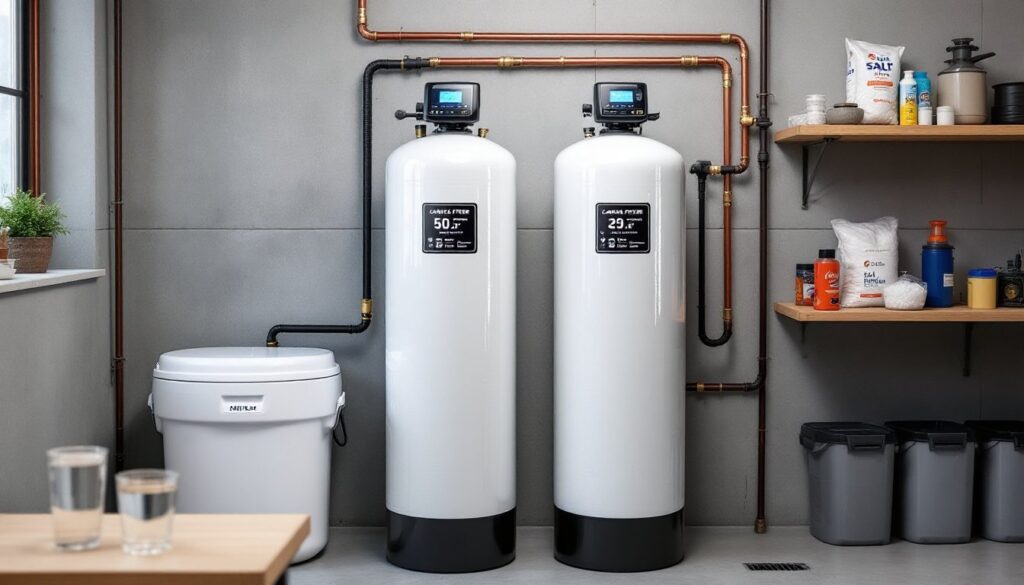
Most configurations position the carbon filter upstream of the softener. This pre-filter setup protects the resin bed from chlorine damage, which can degrade ion exchange capacity over time. Some whole-house systems house both media types in a single tank with layered compartments: others use separate tanks plumbed in series. Multi-tank designs allow independent regeneration cycles and easier media replacement.
A few systems reverse the order, placing the softener first. This arrangement works when chlorine levels are low or when a homeowner prioritizes sediment removal over chlorine protection. But, carbon filters for water softeners positioned after the softener may require more frequent replacement due to residual hardness minerals clogging pores in the activated carbon.
How Water Softeners and Carbon Filters Work Together
Ion exchange in the softener replaces hardness ions with sodium or potassium ions. Incoming water flows through a tank filled with resin beads saturated with sodium. Calcium and magnesium ions bond to the resin, releasing sodium into the water stream. When the resin reaches capacity, a brine solution flushes the beads, stripping away hardness minerals and recharging the media with sodium.
The water softener carbon filter works through physical and chemical adsorption. Activated carbon has a vast internal surface area, one pound can exceed 100 acres of active sites. As water passes through, chlorine molecules, organic compounds, and taste-altering chemicals stick to the carbon surface. Over time, these pores fill, reducing filtration efficiency until the media requires replacement.
Placing carbon filtration before the softener extends resin life. Chlorine oxidizes resin beads, breaking polymer chains and reducing ion exchange efficiency. Pre-filtration removes chlorine before it contacts the softener, protecting the investment and maintaining consistent hardness reduction. Homeowners who install these systems often follow plumbing guides that detail correct sequencing and pressure considerations.
Regenerating the softener typically happens on a timer or metered cycle. The carbon filter doesn’t regenerate, it requires periodic replacement. A 1-cubic-foot carbon tank in an average household might last 6 to 12 months, depending on chlorine levels and water usage. Softener resin can last 10 to 15 years with proper maintenance and chlorine-free influent.
Key Benefits of Combining Water Softening and Carbon Filtration
Scale prevention tops the list. Softened water eliminates the white crust that forms on faucets, showerheads, and inside water heaters. Appliances run more efficiently, water heaters with softened water require up to 30% less energy to reach target temperatures compared to those battling scale buildup.
Improved taste and odor come from carbon filtration. Chlorine imparts a chemical smell and aftertaste that many find unpleasant. Activated carbon removes these compounds, along with earthy or musty notes caused by algae and organic matter. Coffee, tea, and ice cubes taste noticeably better with treated water.
Longer appliance lifespan results from both technologies. Dishwashers, washing machines, and tankless water heaters suffer less wear when fed soft, chlorine-free water. Seals and gaskets last longer without chlorine degradation, and heating elements stay free of mineral deposits. Many appliance manufacturers recommend water treatment to preserve warranties on high-efficiency models.
Reduced soap and detergent use saves money over time. Soft water lathers easily, cutting laundry detergent needs by up to half. Shampoos, dish soaps, and body washes work more effectively, requiring smaller amounts per use.
Healthier skin and hair benefit from the absence of hardness minerals and chlorine. Hard water prevents soap from rinsing cleanly, leaving residue that dries skin. Chlorine strips natural oils from hair and skin. Treated water rinses thoroughly and feels gentler during bathing.
Choosing the Right Water Softener With Carbon Filter for Your Home
Capacity sizing starts with water hardness and household usage. Test your water with a kit or municipal report to determine grains per gallon (gpg) hardness. Multiply daily water consumption, typically 80 to 100 gallons per person, by hardness level and number of occupants. A family of four with 15 gpg hardness needs a softener rated for at least 48,000 grains between regenerations (4 people × 90 gallons × 15 gpg = 5,400 grains per day: a 48,000-grain system regenerates roughly every 8 to 9 days).
Carbon filter sizing depends on chlorine concentration and flow rate. Municipal water usually contains 1 to 4 ppm chlorine. A carbon filter for water softener applications should handle peak flow rates, often 10 to 15 gallons per minute (gpm) for whole-house systems. Undersized carbon tanks cause pressure drops and inadequate contact time, reducing filtration effectiveness.
Single-tank vs. dual-tank systems present a trade-off. Single-tank units save space and cost less upfront. Dual-tank configurations offer flexibility, replace carbon media independently without disturbing the softener, and run separate regeneration schedules. Dual setups also allow for backwashing carbon filters to extend media life, which isn’t possible in combined tanks.
Salt-based vs. salt-free systems address different needs. Traditional salt-based softeners remove hardness minerals. Salt-free conditioners crystallize minerals to reduce scale but don’t actually soften water, soap performance won’t improve. Carbon filtration pairs best with salt-based softeners for complete treatment.
Certifications and testing matter. Look for NSF/ANSI 44 certification for water softeners and NSF/ANSI 42 or 53 for carbon filters. These standards verify performance claims and material safety. Avoid units that lack third-party testing or make vague claims about “quantum” or “magnetic” treatment, those technologies have limited scientific support.
Installation and Maintenance Tips for Homeowners
Installation location requires access to the main water line after the meter and before branch lines. Most codes require a shutoff valve, bypass loop, and drainage for regeneration discharge. The system needs a 120V outlet for the control valve and sufficient clearance for media replacement, typically 3 feet above the tanks. Floor drains or utility sinks should be within 20 feet for brine discharge.
DIYers comfortable with PVC or copper plumbing can install these systems in a weekend. Cut into the main line, install compression or soldered fittings, and run a drain line to the utility sink or standpipe. Follow manufacturer torque specs for control heads to avoid cracking plastic threads. If your home has galvanized steel pipe or you’re uncertain about local plumbing codes, hire a licensed plumber. Many jurisdictions require permits for whole-house water treatment installations.
Softener maintenance involves keeping the brine tank filled with salt. Use solar salt pellets or evaporated salt, avoid rock salt, which contains impurities that foul the resin. Check salt levels monthly and refill when the tank is one-quarter full. Clean the brine tank annually by removing salt, scrubbing interior surfaces, and rinsing thoroughly. Inspect the venturi and injector ports for salt buildup that restricts brine flow.
Carbon filter replacement frequency depends on chlorine levels and usage. Most households replace media every 6 to 12 months. Declining taste and odor removal signals exhausted carbon. Shut off water, relieve pressure, and unscrew the tank head. Dump old carbon, rinse the tank, and refill with fresh granular activated carbon (GAC) or catalytic carbon for chloramine removal. Backwash new carbon for 10 minutes to remove fines before returning the system to service.
Annual resin cleaning with a resin cleaner removes iron, manganese, and organic buildup. Pour the cleaner into the brine well, then trigger a manual regeneration. This extends resin life and restores capacity. Test discharge water pH after regeneration to confirm proper rinsing, acidic or alkaline residuals indicate incomplete flushing.
Common Issues and Troubleshooting Solutions
Hard water breakthrough shows up as spots on dishes or reduced soap lathering. Check salt levels first, an empty brine tank stops regeneration. Verify the timer settings: power outages can reset regeneration schedules. If salt and settings are correct, the resin may be chlorine-damaged or exhausted. Clean with resin cleaner, and if performance doesn’t improve, replace the resin bed.
Chlorine taste or odor after the system indicates exhausted carbon or channeling. Channeling occurs when water finds a path through compacted media, bypassing active carbon. Backwash the carbon filter to redistribute media, or replace if it’s been in service more than a year. Some carbon filters include a post-filter sediment cartridge, replace this every 3 to 6 months to maintain taste quality.
Low water pressure can result from undersized carbon tanks or clogged media. Measure pressure before and after the system with a gauge. A drop greater than 5 psi suggests flow restrictions. Backwash carbon filters to fluff media and clear channels. If pressure doesn’t recover, upgrade to a larger tank or switch to a lower-density carbon that offers less resistance.
Salt bridging creates a hard crust in the brine tank, preventing salt from dissolving. High humidity and wrong salt types cause this. Break the bridge with a broom handle, remove chunks, and refill with pellet salt. Store salt in a dry location and avoid overfilling the tank.
Resin beads in household water appear as small, sand-like particles. This indicates a cracked distributor tube or damaged screen in the softener tank. Shut down the system and inspect the control valve and distributor assembly. Replacing these components typically requires draining the tank and removing the media, a job many DIYers tackle with the right tools and patience, though it’s labor-intensive.
Continuous regeneration wastes salt and water. The control valve may have a stuck piston or faulty timer. Manually advance the regeneration cycle to see if it completes normally. If it restarts immediately, replace the control valve or timer motor. Check for sediment buildup in the valve body that prevents seals from seating properly.
Conclusion
A water softener with carbon filter delivers comprehensive water treatment, eliminating hardness, chlorine, and contaminants in one pass. Proper sizing, installation, and maintenance keep the system running efficiently for years. Homeowners who invest time in understanding these systems enjoy cleaner appliances, better-tasting water, and lower operating costs. Regular filter changes and salt refills are the only ongoing tasks, making this a low-maintenance upgrade with high long-term value.