Table of Contents
ToggleTarget has quietly become one of the smartest places to shop for cordless vacuums. Between competitive pricing, generous return policies, and a curated selection that skips the overwhelming clutter of online-only retailers, it’s a solid option for homeowners who want to see, touch, and compare models before committing. Whether someone’s upgrading from a plug-in vacuum or replacing a worn-out cordless unit, Target stocks options from trusted brands alongside budget-friendly house labels. This guide walks through what to look for, which brands deliver real value, and how to match a cordless vacuum to specific cleaning needs without overspending.
Key Takeaways
- Target cordless vacuums range from $80–$750, with mid-range options ($150–$350) offering the best balance of features, durability, and value for most households.
- Shark and Bissell deliver solid performance at competitive prices, while Dyson premium models excel for homes with pets, allergies, or multiple floor types.
- Look for removable batteries, HEPA filtration, anti-tangle brush rolls, and adequate dustbin capacity (0.6+ liters) when selecting a cordless vacuum at Target.
- Seasonal sales, RedCard discounts, and Target Circle promotions can save 15–40% on cordless vacuums, with price-matching available to beat competitor prices.
- Battery degradation is normal after 2–3 years; brands like Shark and Bissell offer affordable replacement batteries to extend vacuum lifespan without full replacement.
Why Target Is a Smart Shopping Destination for Cordless Vacuums
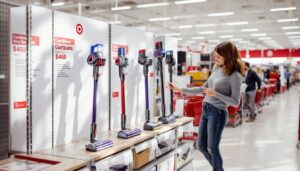
Target combines the convenience of in-store browsing with the flexibility of online ordering. Most locations display floor models, so shoppers can check weight, handle ergonomics, and dustbin access, details that matter when using a vacuum three times a week. The RedCard discount (5% off) applies to vacuums, and Target Circle offers rotating deals on home appliances.
Return policies are straightforward: 90 days for most electronics, including cordless vacuums, with receipt or digital proof of purchase. That’s longer than many big-box competitors and gives homeowners time to test a vacuum on carpet, hardwood, and pet hair before deciding if it’s a keeper.
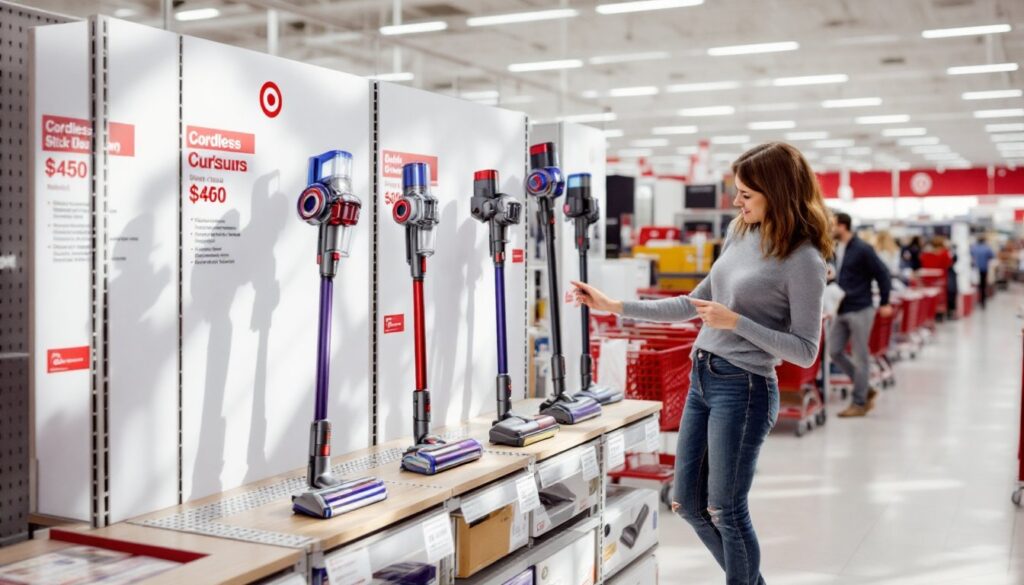
Target’s inventory leans toward mid-range models, roughly $150 to $400, which hits the sweet spot for most households. They stock mainstream brands like Dyson, Shark, and Bissell, plus their own Up&Up and Room Essentials labels for budget-conscious buyers. Selection varies by location, but the website aggregates stock from all stores and warehouses, making it easy to order for pickup or delivery.
One practical advantage: Target often bundles cordless vacuums with extra filters or accessories during seasonal sales (back-to-school, Black Friday, spring cleaning promotions). These bundles can save $30–$50 compared to buying components separately.
Top Cordless Vacuum Brands Available at Target
Dyson sits at the premium end of Target’s cordless vacuum lineup. Models like the V15 Detect and Outsize feature laser dust detection, LCD screens showing particle counts, and motorized brush heads. They’re engineered for whole-home cleaning and handle everything from hardwood to high-pile carpet. Expect to pay $500–$750 for current Dyson models. They’re worth it for homes with pets, allergies, or multiple floor types, but overkill if someone’s cleaning a small apartment once a week.
Shark offers the best value-per-feature ratio at Target. The Shark Vertex and Rocket Pro lines include anti-hair-wrap brush rolls, LED headlights, and removable batteries. Pricing runs $200–$400, and build quality is solid, many users report 3–5 years of daily use without motor failure. Shark vacuums tend to be slightly heavier than Dyson equivalents (around 8–9 lbs vs. 6–7 lbs), but the lower price offsets that for most buyers.
Bissell focuses on pet-specific models. The Pet Hair Eraser and IconPet feature tangle-free brush rolls and specialized pet tools (upholstery brushes, crevice tools with rubber edges). They’re priced $150–$300 and work well on low-to-medium-pile carpet. Suction power is adequate but not exceptional, fine for surface debris and pet fur, less effective on ground-in dirt.
Black+Decker and Hoover round out the budget tier ($80–$150). These are stick vacuums designed for quick cleanups rather than deep cleaning. Battery life is shorter (15–25 minutes), and filters need frequent replacement. They’re practical for college apartments, small condos, or as a secondary vacuum for upstairs bedrooms.
Key Features to Look for When Shopping at Target
Not all cordless vacuums are built alike. Understanding which features matter, and which are marketing fluff, saves money and frustration.
Battery Life and Runtime
Most cordless vacuums use lithium-ion batteries rated between 20V and 60V. Higher voltage usually means longer runtime and stronger suction, but also more weight. Target’s mid-range models average 30–45 minutes of runtime on standard mode, dropping to 15–20 minutes on max suction.
Look for removable batteries. Models with swappable packs (common on Shark and some Dyson units) let someone buy a second battery and effectively double runtime. Charging time varies, 3 to 5 hours is typical. Wall-mounted docks that charge and store the vacuum are convenient but require drilling into drywall or studs.
Battery degradation is real. After 2–3 years of regular use, expect runtime to drop by 20–30%. Brands that sell replacement batteries separately (Shark, Bissell) extend the vacuum’s lifespan. Dyson batteries are harder to source and more expensive.
Suction Power and Floor Type Compatibility
Suction is measured in air watts (AW) or pascals. Target doesn’t always list these specs on shelf tags, but manufacturer websites do. For reference, 100–150 AW handles hardwood and low-pile carpet: 150+ AW is needed for high-pile or shag rugs.
Motorized brush heads (also called power brushes or beater bars) are essential for carpet. They agitate fibers and lift embedded dirt that suction alone misses. Most cordless vacuums at Target include at least one motorized head. Some higher-end models auto-adjust brush speed based on floor type, which prevents scattering debris on hard floors.
Hardwood and tile need soft roller heads or felt-covered brushes to avoid scratching. Dyson’s Fluffy heads and Shark’s soft roller attachments excel here. Budget vacuums often skip this and rely on a single motorized brush, workable, but less ideal for mixed flooring.
Filtration matters for allergy sufferers. HEPA filters trap 99.97% of particles down to 0.3 microns, including pollen, dust mites, and pet dander. According to Good Housekeeping testing, HEPA-equipped models reduce airborne allergens significantly compared to standard filters. Washable filters save money long-term: replaceable filters cost $15–$30 per year depending on brand.
How to Choose the Right Cordless Vacuum for Your Home
Start with square footage and floor types. A 1,000–1,500 sq ft single-story home with mostly hardwood can get by with a mid-tier Shark or Bissell. Larger homes (2,000+ sq ft) with stairs and carpet benefit from Dyson’s longer runtime and stronger suction. Multi-story homes need a vacuum light enough to carry upstairs without strain, anything over 9 lbs gets tiring fast.
Pet owners should prioritize anti-tangle brush rolls and large dustbins (0.5–0.7 liters minimum). Pet hair clogs standard brushes within minutes. Models with rubber fins or v-shaped bristles (like Shark’s Anti-Hair-Wrap) reduce maintenance to once a month instead of once a week.
Dustbin capacity matters more than people think. Small bins (0.2–0.3 liters) require emptying mid-clean in larger homes, which breaks workflow. Bigger bins (0.6+ liters) are bulkier but practical for whole-home sessions. Check whether the bin empties from the bottom or requires disassembly, bottom-release mechanisms are faster and cleaner.
Weight distribution affects usability. A vacuum that’s 6.5 lbs with the weight balanced over the floor head feels lighter than a 6 lb unit with a top-heavy motor. In-store testing helps here. Run the vacuum under a display table or along baseboards to assess maneuverability.
Noise level varies widely. Budget models hit 75–80 decibels (about as loud as a blender): premium units run quieter at 65–70 dB. If someone’s cleaning while others are home, quieter is worth paying for. Real Simple recommends checking decibel ratings in product specs, manufacturers are required to disclose them.
Accessories extend versatility. Crevice tools, upholstery brushes, and dusting wands let a cordless vacuum double as a car vacuum or cobweb remover. Target often sells accessory packs separately for $20–$40, so factor that into the budget if the base model doesn’t include them.
Target Cordless Vacuum Price Ranges and Budget Tips
Target’s cordless vacuum pricing breaks into three tiers. Budget models ($80–$150) handle light cleaning but lack runtime and suction for deep jobs. Mid-range options ($150–$350) offer the best balance of features and durability, this is where Shark and Bissell shine. Premium models ($400–$750) deliver top-tier performance but aren’t necessary unless someone has specific needs like allergies, large square footage, or multiple pets.
Seasonal sales drop prices by 15–25%. Black Friday, Target Circle Week (usually quarterly), and back-to-school promotions are reliable times to buy. Clearance models (last year’s versions) often sit in Target’s electronics section at 30–40% off. Performance differences between model years are usually minor, last year’s Shark at $180 beats this year’s model at $280 if the only upgrade is color.
RedCard holders save 5% on every purchase, which stacks with sales. On a $300 vacuum, that’s $15 back, enough for extra filters or accessories. Target Circle points add up on big-ticket items: a $400 vacuum earns 400 points, worth $4 toward future purchases.
Warranties vary by brand. Dyson offers 2 years, Shark gives 5 years on some models, and budget brands stick to 1 year. Target sells extended warranties through Allstate ($20–$60 depending on vacuum price), which cover accidental damage and battery degradation. Worth considering for models over $300.
Used and refurbished cordless vacuums pop up on Target’s website occasionally, marked down 20–40%. These are customer returns or open-box items. Inspect carefully if buying in-store, check for missing accessories, cracked bins, or worn brush rolls. Online refurbs usually include a 90-day warranty, shorter than new models but adequate for testing.
Compare Target’s price to manufacturer websites and Amazon before buying. Target price-matches, so if Amazon lists the same vacuum for less, show the price at checkout (mobile app works). This applies to vacuums sold and shipped by Amazon, not third-party sellers. According to Today’s Homeowner, homeowners who price-check before major appliance purchases save an average of 12%, worth the extra two minutes.
Buying refurbished batteries separately extends a vacuum’s life for less than half the cost of a new unit. Shark batteries run $50–$80, Dyson batteries $80–$120. If a vacuum works fine but runtime has dropped, a new battery beats replacing the whole machine.