Table of Contents
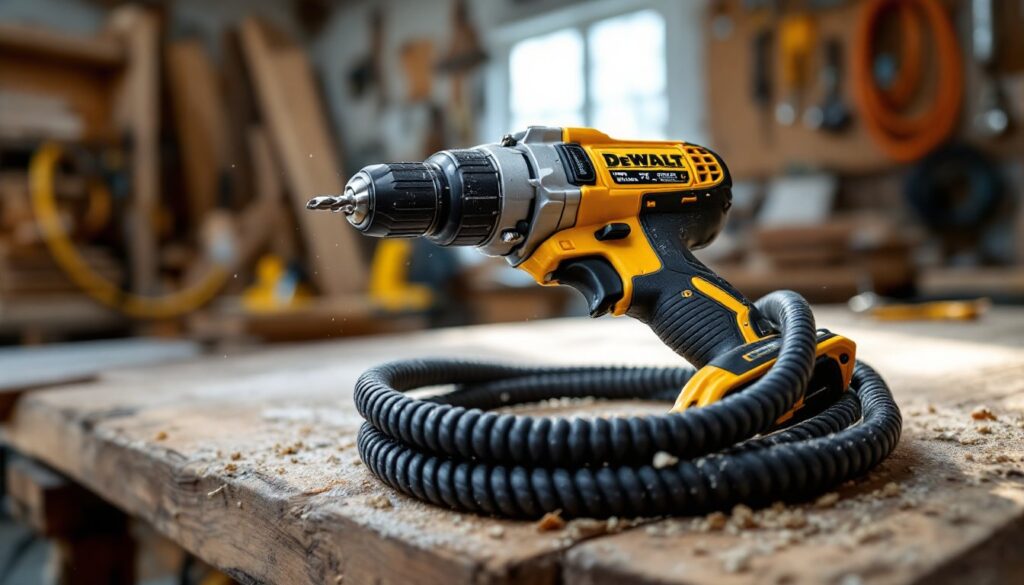
ToggleWhen you’re drilling through doubled-up 2x4s or mixing 50-pound bags of thinset, battery life becomes the enemy. That’s where a DeWalt corded drill earns its keep. Unlike their cordless cousins, corded drills deliver consistent, uninterrupted power, no mid-project battery swaps, no performance drop as charge depletes. For homeowners tackling serious material prep, repetitive drilling, or heavy mixing tasks, a corded drill isn’t a step backward: it’s a deliberate choice for sustained torque and reliability. This guide breaks down why DeWalt’s corded lineup still matters, which models suit typical home projects, and how to get decades of use from a tool that refuses to quit.
Key Takeaways
- A DeWalt corded drill delivers unlimited runtime and consistent torque, eliminating battery swap downtime and power loss during heavy drilling tasks like material prep and mixing compounds.
- Corded drills cost significantly less than cordless alternatives with batteries and chargers, making them an economical choice for homeowners who need dedicated sustained power without a large upfront investment.
- Variable speed control, reversing capability, and a ½-inch chuck are essential features for most homeowners, enabling everything from delicate drilling to large-diameter hole saws and mixing paddles.
- DeWalt corded drills excel in stationary or semi-stationary workflows such as deck building, tile installation, mixing thinset or joint compound, and boring large-diameter holes where cordless models trigger thermal shutoffs.
- Brush replacement, cord inspection, and chuck cleaning are simple maintenance tasks that extend your corded drill’s lifespan for decades, with carbon brush replacement costing under $15 and preventing motor failure.
Why Choose a DeWalt Corded Drill Over Cordless Options
Cordless drills dominate retail shelves, but corded models solve problems batteries can’t. Unlimited runtime tops the list: a corded drill plugged into a standard 120V outlet runs as long as the job demands, whether that’s drilling 200 pilot holes for deck screws or mixing multiple batches of mortar. No recharge downtime, no backup batteries to manage.
Consistent torque is the second advantage. Cordless drills lose power as battery voltage drops, especially under load. A corded drill maintains full motor speed from first hole to last. This matters when drilling through engineered lumber, steel studs, or using large-diameter hole saws that bog down weaker tools.
Weight and balance often favor corded models. Without a battery pack hanging off the handle, many corded drills feel lighter and more maneuverable, reducing arm fatigue during overhead or repetitive work. The trade-off is obvious: you’re tethered to an outlet or extension cord, which limits mobility. For shop-based projects, material prep stations, or job sites with accessible power, that’s rarely an issue.
Cost-per-use also tips in favor of corded tools. A quality corded drill often costs half what an equivalent cordless model with batteries and charger runs. For homeowners who already own a cordless drill for quick tasks but need dedicated power for heavy work, a corded drill fills the gap without draining the tool budget. Many professionals maintain both: cordless for portability, corded for sustained power.
Top DeWalt Corded Drill Models for Home Projects
DeWalt’s corded drill lineup focuses on durability and motor performance. The DWD112 stands out as a half-inch variable-speed reversing drill built for general homeowner use. It delivers 8.5 amps and 0–2,500 RPM, handling everything from drilling pocket holes in cabinet frames to driving lag screws into treated lumber. The metal gear housing resists jobsite abuse, and the keyless chuck allows one-handed bit changes, critical when you’re balancing on a ladder.
For mixing tasks, the DWD210G brings 10 amps and a side-handle design that stabilizes heavy loads. Its 0–1,200 RPM range suits mixing drywall mud, epoxy, or paint. The right-angle configuration of the DWD460 solves access problems: drilling between joists, inside cabinets, or along wall plates where a standard drill won’t fit. It uses a 10-amp motor and accepts up to ⅜-inch bits, making it a specialty tool worth owning if you tackle plumbing or electrical rough-ins.
The DWD520 (formerly popular but sometimes hard to source new) earned a reputation for heavy-duty applications, think drilling through concrete block with masonry bits or driving self-tapping screws into steel framing. If you’re shopping used tools or refurbs, it’s worth grabbing.
None of these models compete on bells and whistles with cordless drills, but that’s the point. They’re built for straightforward power delivery without digital controls, battery management chips, or proprietary charging systems.
Key Features to Look for in a DeWalt Corded Drill
Choosing the right corded drill means matching features to your typical workload. Amperage directly correlates with motor power: 8–10 amps handles most homeowner tasks, while 12+ amps enters contractor territory for daily, abusive use. More amps also mean more weight and heat generation, so don’t overbuy if you’re drilling softwood and hanging drywall.
Variable speed control (usually a trigger-sensitive switch) gives you low-speed control for starting holes without bit walk and high-speed drilling once the bit bites. Cheaper models use single-speed motors, which work but demand more skill to prevent workpiece damage. Reversing capability is non-negotiable: you’ll back out jammed bits, remove screws, and clear clogged hole saws constantly.
Chuck size determines bit compatibility. A ⅜-inch chuck accepts smaller bits (up to ⅜-inch shank diameter) and suits detail work, while a ½-inch chuck handles larger spade bits, augers, and mixing paddles. Most homeowners benefit from the ½-inch option for versatility, even if they rarely max it out.
Cord length matters more than most realize. A 6-foot cord forces you to use an extension cable for nearly every task: 8–10 feet offers better reach without adding a failure point (every cord connection risks tripping GFCI outlets or creating voltage drop). Some pros replace factory cords with heavy-duty 12-gauge extensions permanently zip-tied to the tool.
Auxiliary handles provide leverage and control during high-torque applications. Side handles thread into the drill body and rotate to match your grip angle, critical when using hole saws or mixing paddles that can twist the tool violently if they bind.
Motor Power and Chuck Size
Motor amperage and chuck capacity work together to define a drill’s capability envelope. An 8-amp motor paired with a ½-inch keyless chuck suits general drilling and light fastening, boring ¾-inch holes through dimensional lumber, installing cabinet hardware, or driving 3-inch deck screws. Step up to 10+ amps for repetitive heavy drilling: installing duct runs through multiple studs, boring holes for plumbing stack vents, or using bi-metal hole saws through nail-embedded framing.
Chuck quality varies even within DeWalt’s lineup. Keyless ratcheting chucks grab bits securely without tools, but cheaper versions slip under high torque. Metal chuck bodies outlast composite housings, especially if you drop the drill (which you will). For mixing applications, a keyed chuck (tightened with a chuck key) provides a tighter grip on paddle shanks, though it slows bit changes.
Be aware of nominal vs. actual capacity: a ½-inch chuck accepts bits with shanks up to 0.50 inches in diameter, but long bits or those with reduced shanks may bottom out before the jaws grip properly. Check bit length compatibility if you’re drilling deep pocket holes or using extension bits.
Best Applications for DeWalt Corded Drills in DIY Projects
Corded drills excel in stationary or semi-stationary workflows. Deck building tops the list: after layout and cutting, you’re often working near a power source, drilling hundreds of pilot holes and driving structural screws. A corded drill maintains speed through pressure-treated lumber (which is harder and more abrasive than standard pine) without battery anxiety.
Material prep and fabrication benefit from unlimited runtime. Building a workbench, assembling shelving units, or constructing a fence section involves repetitive drilling and driving. Set up a work table near an outlet, and a corded drill becomes an assembly-line tool.
Mixing compounds demands both torque and endurance. Thinset for tile, joint compound for drywall finishing, epoxy for garage floor coatings, all require multi-minute mixing sessions that drain cordless batteries fast. A corded drill with a paddle mixer attachment powers through 50-pound bags without hesitation. Use a mixing paddle rated for your material viscosity and always wear safety goggles and dust mask when adding dry powder to water.
Boring large-diameter holes stresses drills. Installing door locksets (2⅛-inch hole saw), running HVAC ducts (4-inch core bits), or mounting whole-house fans all require sustained high torque. Cordless drills often trigger thermal shutoffs mid-hole: corded drills push through. Clamp your workpiece and use a side handle for control, kickback from a jammed hole saw can break a wrist.
Drilling masonry or metal in volume suits corded drills. Installing a French cleat wall system might require 40+ holes through drywall into concrete block: a corded hammer drill (DeWalt makes corded models with hammer function) handles the task on a single outlet. When drilling metal studs or steel posts, use cutting oil to reduce heat and extend bit life, and wear hearing protection, metal drilling is loud.
Maintenance Tips to Extend Your DeWalt Corded Drill’s Lifespan
Corded drills are mechanically simpler than cordless models, but neglect still kills them. Brush motor maintenance is the big one: most corded drills use carbon brushes that wear down over time, creating sparking, power loss, and eventually motor failure. DeWalt brushes are user-replaceable on many models, check your manual for access ports (usually behind screw-on caps near the motor housing). Replace brushes when they’re worn to ¼ inch or less. Cost is under $15 for a pair: ignoring them can destroy a $100+ motor.
Cord and plug care prevents electrical failures. Inspect the power cord regularly for cuts, kinks, or exposed wire. Repair damage immediately with heat-shrink tubing or electrical tape rated for the amperage, or replace the entire cord. Never jerk the drill by the cord or wrap cord tightly around the tool when hot, heat degrades insulation. Store cords loosely coiled, and use strain relief clips if your model lacks factory protection where the cord enters the housing.
Chuck cleaning keeps bits secure. Sawdust, metal shavings, and drywall dust pack into chuck jaws, preventing full closure. Every few months, open the chuck fully, blow out debris with compressed air, and wipe jaws with a dry cloth. A drop of machine oil on the chuck threads once a year keeps the mechanism smooth. Never use WD-40 or penetrating oil, they attract more dust.
Ventilation and cooling extend motor life. Corded drills pull air through vents to cool the motor: blocked vents cause overheating and winding damage. After dusty work (especially drywall or masonry drilling), blow out the motor housing with compressed air. Hold the tool outdoors and wear a dust mask, you’re ejecting fine particulate.
Bearing lubrication (if accessible) requires opening the gear case, beyond most homeowners’ comfort zone, but doable with a service manual. If your drill develops grinding noises or wobble, this is often the culprit. DeWalt service centers handle this for $40–60, or tackle it yourself with lithium grease and patience.
Storage matters: hang corded drills or store them in cases to prevent drops. Keep them in climate-controlled spaces if possible, temperature swings cause condensation inside the motor housing, leading to corrosion. If you store tools in an unheated garage or shed, let the drill warm to room temperature before use to avoid moisture issues.
Conclusion
A DeWalt corded drill isn’t a relic, it’s a deliberate tool choice for projects that demand sustained power, consistent performance, and no downtime. Match amperage and chuck size to your typical workload, maintain brushes and cords, and you’ll own a drill that outlasts three generations of cordless batteries. For homeowners building, remodeling, or fabricating at a fixed workspace, the cord isn’t a limitation, it’s a direct line to unlimited runtime.