
Table of Contents
ToggleA sofa sleeper with chaise isn’t just furniture, it’s a tactical response to the way people actually live today. Tight square footage, frequent guests, home offices doubling as guest rooms, kids moving back in. The need for flexible furniture that pulls double (or triple) duty is real. This piece combines lounge-worthy seating, a pull-out bed, and the stretched-out comfort of a chaise in one footprint. Whether someone’s furnishing a basement rec room, a studio apartment, or a multipurpose den, this configuration offers serious utility without the clutter of multiple furniture pieces. Here’s what to know before buying one.
Key Takeaways
- A sofa sleeper with chaise consolidates everyday seating, guest accommodations, and lounging space into one piece, making it ideal for homes under 1,500 square feet where space efficiency is critical.
- Quality mattresses should be at least 5 inches thick with hybrid construction (innerspring coils or memory foam) rather than thin foam-only designs that sag quickly after repeated use.
- Chaise configuration (left or right-facing) and lift-top storage options vary by model, so measure your room layout and choose the orientation that maximizes both functionality and clearance for bed deployment.
- Regular maintenance including weekly vacuuming, monthly cushion rotation, bi-annual lubrication of sleeper mechanisms, and periodic deployment cycles extends a sofa sleeper with chaise lifespan to 10+ years.
- Position your sofa sleeper with chaise along the longest wall with at least 36 inches of clearance in front to allow the sleeper mechanism to fully extend without obstruction.
- Built-in storage compartments beneath the chaise provide practical solutions for linens, pillows, and seasonal items, adding hidden organizational value to your multi-functional furniture piece.
What Is a Sofa Sleeper with Chaise?
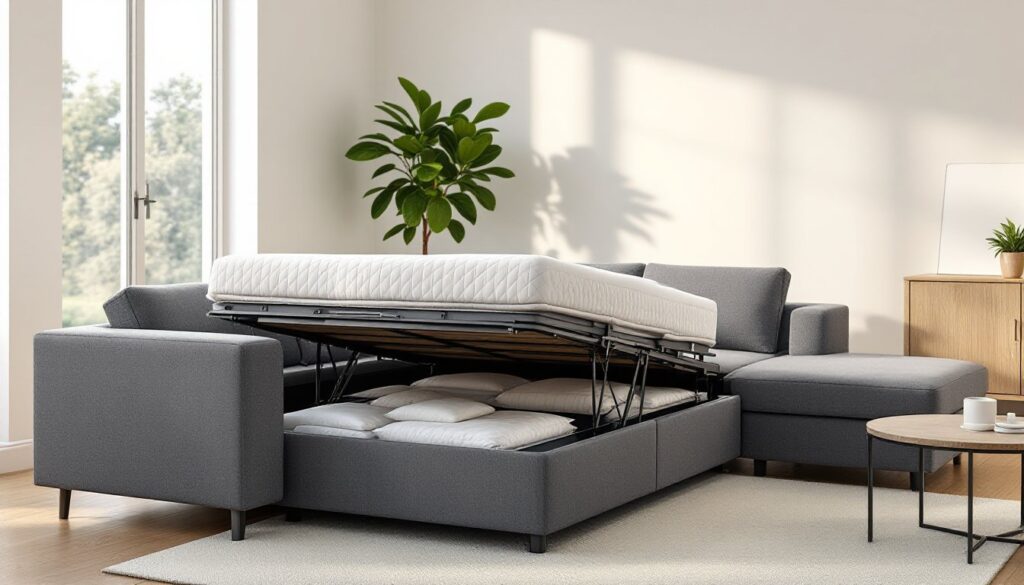
A sofa sleeper with chaise is a sectional-style couch with an integrated pull-out bed and an extended chaise lounge on one end. The chaise section typically runs perpendicular to the main sofa body, creating an L-shaped footprint. Most designs position the sleeper mechanism in the main sofa section, while the chaise provides additional seating or storage underneath.
The sleeper mechanism is usually a fold-out frame with a mattress that pulls from beneath the seat cushions. Common mattress sizes include twin, full, and queen, though dimensions vary by manufacturer. The chaise can be configured left or right, depending on room layout.
Unlike a standard sleeper sofa or a regular sectional, this hybrid design addresses three needs at once: everyday seating, overnight guest accommodations, and the lounging real estate of a chaise. It’s particularly effective in spaces where a separate guest bed isn’t feasible but overnight visitors are common.
Why Choose a Sofa Sleeper with Chaise for Your Home?
The biggest advantage is space efficiency. Instead of dedicating a room to a guest bed that sits empty 350 days a year, homeowners consolidate function into one piece of furniture. For homes under 1,500 square feet, that’s a game-changer.
A sofa sleeper with chaise also supports multiple use cases simultaneously. Someone can nap on the chaise while another person sits upright on the main section. When guests arrive, the sleeper deploys without needing to clear the room or rearrange other furniture. Many models from manufacturers like modern sectional designs feature low-profile frames that don’t dominate a room visually.
Another practical benefit: built-in storage. Many chaise sections lift to reveal storage compartments for linens, pillows, or off-season items. This is especially useful in homes without linen closets or basement storage.
Finally, durability. Quality sleeper sofas with chaise are built on hardwood frames (typically kiln-dried hardwood or engineered wood) with reinforced corners to handle repeated fold-out cycles. They’re designed for daily use, not occasional deployment. That makes them a better long-term investment than a cheap futon or air mattress setup.
Key Features to Look for When Shopping
Not all sleeper sofas with chaise are created equal. Here’s what separates a solid purchase from a regret.
Mattress Quality and Comfort
The mattress inside a sleeper sofa is where most budget models fail. Thin, foam-only mattresses (under 4 inches thick) tend to sag and bottom out after a few uses. Look for hybrid constructions with innerspring coils or memory foam layers at least 5 inches thick.
Some higher-end models offer gel-infused memory foam or pocket coil systems similar to standalone mattresses. These provide better support for adults and reduce the “bar-in-the-back” complaint common with older sleeper designs. If possible, test the mattress fully deployed in the showroom. Sit on it, lie down, check for firmness and edge support.
Mattress dimensions also matter. A queen sleeper requires roughly 60 inches of width when deployed, so measure the room to ensure adequate clearance. Full and twin sizes are more compact but may not comfortably sleep two adults.
Chaise Configuration and Storage Options
Chaise orientation, left-facing or right-facing, depends on room layout and entry points. Stand at the spot where the sofa will sit and face outward. If the chaise extends to the left, it’s left-facing: to the right, right-facing. Many retailers offer both configurations in the same model.
Storage beneath the chaise is a major bonus. Lift-top chaises with gas-lift hinges provide easy access to storage compartments. Check the depth and interior dimensions, some are deep enough for blankets and pillows: others barely fit throw pillows. Models like the Lester Sofa with Chaise and Twin Sleeper showcase how integrated storage can blend seamlessly into the overall design.
Also consider the chaise cushion itself. Reversible cushions with durable upholstery on both sides last longer and resist wear. High-density foam (1.8 lbs/ft³ or higher) holds its shape better than standard foam.
Best Room Placements and Layout Ideas
A sofa sleeper with chaise works best when positioned to maximize both its daytime and nighttime roles. In a living room, place it against the longest wall with the chaise extending into the room. This creates a natural boundary for conversation areas and leaves space in front for the bed to deploy.
For a home office or den, orient the sofa so the chaise faces a window or entertainment center. This setup supports lounging during the day and quick conversion to a guest bed at night. Ensure at least 36 inches of clearance in front of the sofa for the sleeper mechanism to fully extend.
In basement rec rooms, positioning the sofa in the center of the room (floating layout) can work if the space is large enough. This allows foot traffic to flow around the piece and keeps sightlines open to a TV or projector screen.
Avoid placing a sleeper sofa with chaise in tight corners or alcoves. The bed deployment requires clearance, and the chaise adds width that can block doorways or pathways. Measure the deployed footprint before committing to a spot. Small space solutions from apartment-friendly layouts often emphasize multi-zone planning to accommodate convertible furniture.
Safety note: If the sofa sits on hardwood or tile, use furniture pads or a low-pile area rug to prevent sliding when the sleeper is pulled out or pushed back in.
Maintenance Tips to Extend Your Sleeper Sofa’s Lifespan
Sleeper sofas with chaise take more abuse than standard furniture, so regular maintenance isn’t optional.
Vacuum weekly. Use an upholstery attachment to remove dust, pet hair, and debris from seams and crevices. This prevents particles from working into the fabric or mechanism.
Rotate and flip cushions every month. This distributes wear evenly and prevents permanent body impressions. If cushions have zippers, remove covers and air them out occasionally to reduce odors.
Lubricate the sleeper mechanism twice a year. Use a silicone-based spray lubricant (not WD-40, which attracts dust) on hinges, springs, and pivot points. Wipe away excess to prevent staining fabric.
Check frame fasteners annually. Sleeper mechanisms put stress on frame joints. Tighten any loose screws or bolts with a cordless drill or socket wrench. If the frame is held together with cam locks (common in flat-pack furniture), re-tighten them, they loosen over time.
Protect upholstery. For fabric sofas, apply a fabric protector spray (like Scotchgard) every 6–12 months. For leather or faux leather, use a conditioner to prevent cracking. Always test products on a hidden area first.
Address spills immediately. Blot (don’t rub) with a clean, dry cloth. For stains, use an upholstery cleaner appropriate for the fabric type. Avoid over-wetting, excess moisture can damage foam or promote mold.
Deploy the sleeper regularly, even if it’s not in use. Mechanisms that sit idle for months can stiffen or develop rust. Pull it out once every few weeks and cycle it open and closed.
If the mattress develops odors, sprinkle baking soda on the surface, let it sit for 15 minutes, then vacuum thoroughly. For deeper cleaning, use a handheld steam cleaner, but allow the mattress to dry completely before folding it back into the frame.
Wear PPE when servicing mechanisms. Sleeper frames have sharp edges and pinch points. Wear work gloves and keep fingers clear of moving parts during lubrication or adjustment.
Proper care keeps the piece functional for 10+ years. Neglect, and the mattress sags, mechanisms jam, and upholstery wears through in high-contact areas.