Table of Contents
ToggleWhen rental carpet cleaners cost $30–$50 a day and professional services run $150–$400 per room, owning a reliable home carpet cleaner makes financial sense. Stanley carpet cleaners, built by the same brand trusted for rugged tools and hardware, bring industrial-grade cleaning power to residential use. These machines tackle ground-in dirt, pet stains, and high-traffic wear without the hassle of scheduling pros or dragging equipment back to the rental shop. Whether you’re refreshing builder-grade carpeting before selling a home or maintaining wool area rugs in a finished basement, understanding how to operate and maintain these machines delivers results worth the investment.
Key Takeaways
- Stanley carpet cleaners use hot water extraction to inject heated solution and extract dirt, saving homeowners $150–$400 per professional cleaning session.
- Proper technique—including pre-treatment, the two-pass method, and overlapping 50% on each pass—makes the difference between mediocre and professional-level results.
- Regular maintenance after every use, such as flushing tanks, cleaning the brush roll, and leaving lids open to air-dry, prevents clogs and extends the machine’s lifespan.
- Stanley carpet cleaners handle multiple surfaces including nylon, polyester, wool carpets, and upholstery, but are not suitable for natural fiber rugs like sisal or jute.
- A Stanley carpet cleaner pays for itself in 3–5 uses when compared to rental fees or professional services, making it a smart investment for homes with pets or high-traffic areas.
What Is a Stanley Carpet Cleaner?
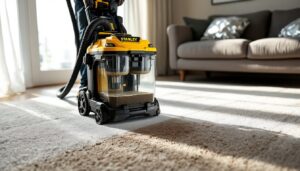
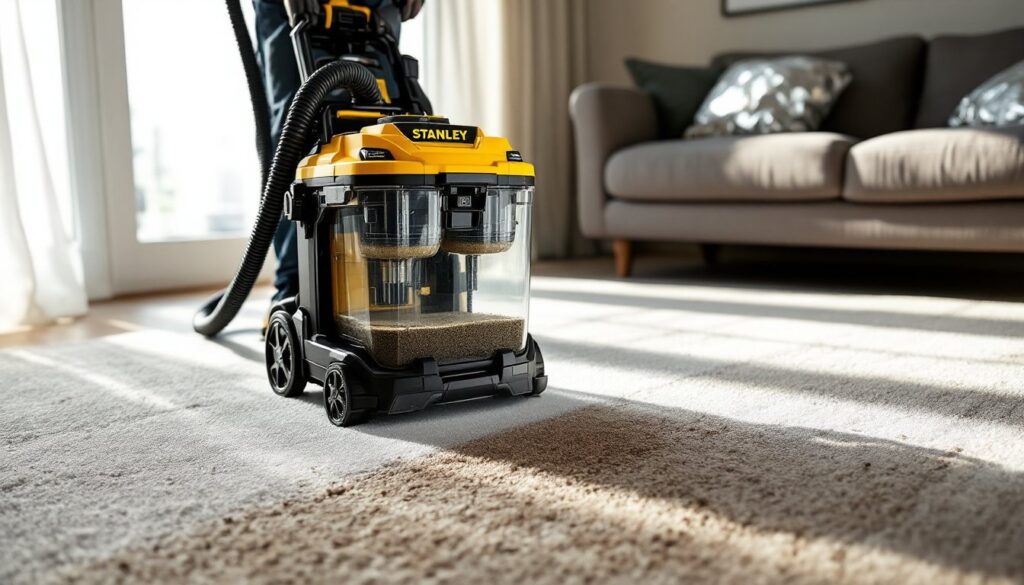
A Stanley carpet cleaner is a portable extraction machine designed for deep cleaning carpets and upholstery. Unlike vacuum cleaners that remove surface debris, these units inject a heated cleaning solution into carpet fibers, agitate embedded dirt, and extract dirty water through suction, a process called hot water extraction.
Most Stanley models feature a dual-tank system: one holds clean water mixed with detergent, while a separate recovery tank collects dirty wastewater. This prevents cross-contamination and allows users to monitor how much grime they’re pulling from flooring.
Stanley carpet cleaners typically include:
- Motorized brush heads that scrub fibers while dispensing solution
- Heated water reservoirs (on select models) to boost cleaning chemistry
- Upholstery tools for furniture, car interiors, and stairs
- 6–12 amp motors generating sufficient suction for residential and light commercial use
These machines handle nylon, polyester, and wool carpets, as well as most synthetic upholstery fabrics. They’re not suitable for natural fiber rugs (sisal, jute) or carpets with non-colorfast dyes. Always test in an inconspicuous area first.
Key Features and Benefits of Stanley Carpet Cleaners
Stanley’s reputation for durable tools carries over to their cleaning equipment. Here’s what sets these machines apart:
Rugged Construction
Housing made from high-impact polymer stands up to jobsite conditions, useful if the cleaner pulls double duty in a workshop or rental property. Casters are reinforced to handle stairs and thresholds without cracking.
Multi-Surface Versatility
Beyond carpets, most models clean tile grout, sealed concrete, and rubber stair treads using the same extraction method. Swap the standard brush head for a hard-floor tool (sold separately on some models).
Heated Cleaning
Water heated to 140–160°F activates enzymatic cleaners and dissolves oils more effectively than cold water. This feature significantly improves stain removal on pet accidents and cooking grease tracked from kitchens.
Extended Hose Reach
Many Stanley units include 8–10 foot hoses, allowing users to clean vehicle interiors or second-story landings without repositioning the base unit repeatedly.
Transparent Recovery Tank
Seeing murky water accumulate provides visual confirmation the machine is working, and motivation to keep making passes until extraction runs clear.
Homeowners with pets, children, or high foot traffic save hundreds annually by handling routine deep cleans themselves. The machines also extend carpet lifespan by removing abrasive grit that wears pile fibers.
How to Use a Stanley Carpet Cleaner: Step-by-Step Guide
Proper technique prevents over-wetting, which can lead to mold growth in carpet padding. Follow this sequence for best results:
Pre-Cleaning Prep
- Vacuum thoroughly to remove surface dirt, hair, and debris. Carpet cleaners aren’t designed to pick up dry particulates.
- Pre-treat stains with an enzymatic spotter 10–15 minutes before cleaning. Blot, don’t scrub, to avoid spreading stains.
- Move furniture or use aluminum foil squares under legs to prevent wood stain transfer to damp carpet.
- Check ventilation. Open windows and run ceiling fans to speed drying.
Operating the Machine
- Fill the clean water tank with hot tap water (not boiling) to the fill line. Add the manufacturer’s recommended amount of carpet cleaning solution, more detergent doesn’t mean cleaner carpets. Excess soap leaves residue that attracts dirt.
- Plug into a grounded 15-amp circuit. Avoid extension cords, which can cause voltage drop and reduce motor performance.
- Start in the farthest corner and work backward toward the exit to avoid walking on cleaned areas.
- Press the trigger to spray solution while pushing the machine forward slowly (about 1 foot per second). Release the trigger and pull backward at the same speed to extract water. Overlap passes by 50%.
- Make 2–3 passes over heavily soiled areas. If water isn’t extracting, check that the recovery tank isn’t full and hoses aren’t kinked.
Post-Cleaning
- Empty and rinse both tanks immediately after use. Stagnant water in the recovery tank will smell within hours.
- Run a rinse-only pass with clean water (no detergent) over the entire area to remove soap residue.
- Allow 6–12 hours drying time before replacing furniture. Use fans or a dehumidifier in humid climates.
Safety note: Wear rubber-soled shoes to avoid slipping on wet carpet, and keep children and pets off the area until fully dry.
Maintenance and Care Tips for Your Stanley Carpet Cleaner
Regular maintenance prevents clogs and extends motor life. Neglected machines lose suction and leave carpets wetter than necessary.
After Every Use
- Flush tanks and hoses with clean water. Run the machine for 30 seconds with plain water in the clean tank to purge solution from internal lines.
- Remove and rinse the brush roll. Hair and fibers wrap around the bristles, reducing agitation effectiveness. Most brush rolls lift out without tools.
- Wipe down the nozzle and suction pathway with a damp cloth. Dried detergent buildup restricts airflow.
- Leave tank lids open to air-dry and prevent mildew odors.
Monthly (or Every 3–4 Uses)
- Check the drive belt (if equipped). A loose or cracked belt causes the brush roll to spin erratically. Replacements are typically $5–$10.
- Inspect hoses for cracks or punctures. Small leaks drastically reduce suction. Reinforce splits temporarily with duct tape, but replace damaged hoses.
- Clean the float valve in the recovery tank. This mechanism shuts off suction when the tank is full. Debris on the float causes premature shutoff.
Storage
- Drain all water before storing. Even small amounts freeze in unheated garages and crack tanks.
- Store upright with hoses loosely coiled. Tight kinks weaken hose walls over time.
- Keep detergent separate. Concentrated formulas can corrode plastic if spilled inside the machine.
Many cleaning equipment malfunctions stem from improper storage rather than mechanical failure. Treat the machine like any powered tool, clean and dry after every job.
Common Issues and Troubleshooting Solutions
Even well-maintained machines occasionally act up. Here’s how to diagnose and fix the most frequent problems:
Weak or No Suction
- Recovery tank full: Empty it. The float valve automatically cuts suction when the tank reaches capacity.
- Clogged hose or nozzle: Disconnect the hose and check for blockages. Use a straightened wire hanger to clear debris.
- Dirty filter: Some models have foam or mesh filters protecting the motor. Rinse them under tap water and let air-dry completely before reinstalling.
Solution Not Dispensing
- Empty clean water tank: Seems obvious, but easy to overlook mid-job.
- Trigger mechanism jammed: Detergent residue can gum up the trigger valve. Flush with warm water and cycle the trigger 10–15 times.
- Air lock in the pump: Turn the machine off, then back on while holding the trigger. This sometimes clears trapped air.
Brush Roll Not Spinning
- Broken or loose belt: Remove the brush roll cover (usually 2–4 screws) and inspect the drive belt. Replace if stretched or damaged.
- Tangled debris: Hair and string can jam the brush bearing. Cut away obstructions with scissors, don’t yank, which can bend the roll shaft.
Carpet Stays Wet After Cleaning
- Too much solution: Use less detergent and make more extraction-only passes (trigger released, pulling backward).
- Slow pass speed: Moving too slowly over-saturates fibers. Maintain steady 1-foot-per-second pace.
- Worn suction gaskets: Rubber seals around the nozzle deteriorate over time. Replacements are model-specific but widely available.
If the motor runs but produces no suction or spray, internal pump failure may require professional service. Weigh repair costs against replacement, many Stanley carpet cleaners retail between $150–$350.
Best Practices for Achieving Professional-Level Results
The difference between mediocre and exceptional carpet cleaning often comes down to technique, not equipment.
Pre-Treatment Strategy
Spray high-traffic areas and visible stains with a dedicated carpet pre-treatment 15–20 minutes before running the machine. This dwell time allows enzymes to break down proteins (pet urine, blood) and surfactants to lift oils. For tannin stains (coffee, wine), use a product with oxygen bleach, but test colorfastness first.
Water Temperature Matters
Hot water doesn’t just feel cleaner, it chemically accelerates soil suspension. If your Stanley model lacks a heater, fill the tank with the hottest tap water available (usually 120–140°F from residential water heaters). Water cools quickly, so work in sections and refill with hot water rather than topping off.
The Two-Pass Method
First pass: Spray and extract in overlapping rows, working solution deep into the pile. Second pass (after 5–10 minutes): Extraction-only with no solution. This lifts residual detergent that would otherwise attract dirt. Professional cleaners call this a “rinse pass,” and it’s the step most homeowners skip.
Edge and Corner Technique
The machine’s main head won’t reach baseboards. Use the included crevice tool or upholstery attachment to clean the perimeter where dust and pet dander accumulate. Wipe baseboards with a damp cloth before cleaning to prevent dirt transfer.
Drying Acceleration
Proper extraction removes 90–95% of applied water, but fibers still hold moisture. Improve drying with these household organization strategies:
- Cross-ventilation: Open windows on opposite sides of the room.
- Dehumidifiers: Drop relative humidity below 50% to speed evaporation.
- Ceiling fans on high: Increase air circulation across the carpet surface.
- Avoid over-wetting: If you can squeeze water from carpet fibers, you’ve applied too much solution.
Stain-Specific Tactics
- Pet urine: Use an enzymatic cleaner (not just detergent) to break down uric acid crystals. Clean the subfloor if the stain has soaked through padding.
- Red wine/Kool-Aid: Blot immediately, apply hydrogen peroxide (test first), then clean normally.
- Grease/oil: Sprinkle baking soda to absorb oil, vacuum, then pre-treat with a degreaser before extraction.
Frequency Recommendations
High-traffic areas (entryways, hallways): every 3–4 months. Moderate-use rooms (living rooms, bedrooms): every 6–8 months. Low-traffic spaces: annually. More frequent cleaning extends carpet life by removing abrasive grit that cuts fibers at the base.
Conclusion
Stanley carpet cleaners deliver professional-grade results without recurring rental fees or scheduling delays. Success hinges on proper prep work, correct solution ratios, and thorough extraction technique, not just running the machine back and forth. Maintain the equipment after every use, and it’ll handle years of deep cleaning across carpets, upholstery, and vehicle interiors. For homeowners tackling pet stains, high-traffic wear, or pre-sale home staging, these machines pay for themselves in 3–5 uses compared to rental or service costs.