Table of Contents
ToggleBlack Friday has evolved from a mad dash for discounted TVs into a strategic opportunity for homeowners to build out their smart home ecosystem without very costly. While manufacturers introduce new tech year-round, the deepest discounts on smart speakers, security cameras, thermostats, and lighting systems consistently land during this shopping event. The challenge isn’t finding deals, it’s figuring out which ones actually fit your home’s infrastructure and your long-term automation goals. This guide cuts through the hype to help homeowners navigate the 2026 Black Friday smart home landscape with a clear plan.
Key Takeaways
- Black Friday smart home deals offer 30–60% discounts on major brands like Amazon, Google, Ring, and Arlo, making it the deepest annual savings window for building or upgrading your smart home ecosystem.
- Plan your purchases before sale day by auditing Wi-Fi coverage, choosing a single ecosystem (Alexa, Google, or Apple), and verifying electrical and mechanical compatibility for thermostats, locks, and doorbells.
- Smart speakers with Zigbee or Thread radios, security cameras with color night vision, and smart thermostats can reduce heating/cooling costs by 10–23%, delivering long-term ROI that justifies slightly higher upfront investment.
- Bundle deals on Black Friday—like smart speakers paired with compatible bulbs or cameras with subscription trials—reduce per-unit costs and eliminate compatibility guesswork for DIYers.
- Start with high-impact devices in high-traffic areas (smart plugs for convenience, smart locks for security, video doorbells for safety) rather than low-priority gadgets in rarely-used spaces.
- Use price-tracking tools and extend return windows (30–90 days during holidays) to ensure Black Friday smart home purchases integrate smoothly with your existing setup and solve real daily frustrations.
Why Black Friday Is the Best Time to Upgrade Your Smart Home
Black Friday has become the single best shopping window for smart home gear, and the math backs it up. Most major brands, Amazon, Google, Ring, Philips, and Arlo, treat this period as their primary annual clearance event, offering discounts between 30–60% on current-generation devices. That’s substantially deeper than the sporadic sales seen during Prime Day or Memorial Day.
For DIYers, this timing also coincides with end-of-year product cycles. Manufacturers often refresh their lineups in early fall, meaning Black Friday inventory includes both the newest releases (at moderate discounts) and previous-gen models (at steep cuts). If your smart home doesn’t require the absolute latest features, say, Wi-Fi 7 or Matter 1.2 compatibility, last year’s flagship video doorbell or thermostat still performs reliably and integrates smoothly with existing ecosystems.
Another practical advantage: bundling. Retailers frequently package smart speakers with compatible smart bulbs, or security cameras with subscription trials. These bundles reduce the per-unit cost and simplify compatibility guesswork, especially for homeowners just starting their smart home DIY journey.
Black Friday also creates a rare opportunity to compare competing platforms side-by-side at their lowest price points. A Google Nest Hub and an Amazon Echo Show, normally separated by $40–50, might land within $10 of each other during the sale. That price parity makes it easier to choose based on ecosystem fit rather than budget constraints.
Top Smart Home Categories to Watch This Black Friday
Smart Speakers and Displays
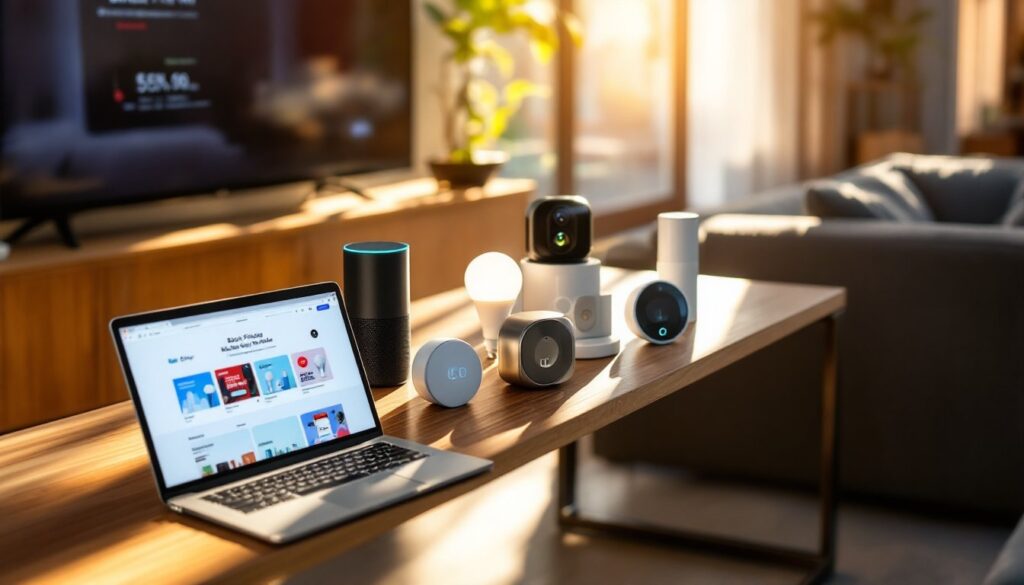
Smart speakers and displays anchor most home automation setups, acting as voice control hubs for lights, locks, thermostats, and even appliances. Black Friday typically delivers the steepest discounts in this category, often 40–50% off flagship models.
The Amazon Echo Dot and Google Nest Mini routinely drop to $20–25, making them ideal low-cost entry points for bedrooms, garages, or workshops. For kitchens and living areas, the Echo Show 8 and Nest Hub (2nd Gen) offer touchscreen interfaces that display recipes, security camera feeds, and thermostat controls. These usually hit the $50–70 range during Black Friday, down from their typical $100+ pricing.
When choosing between ecosystems, consider your existing gear. If you’ve already invested in Ring cameras or Wyze plugs, an Alexa-compatible speaker integrates more seamlessly. Google Assistant handles complex multi-step routines and natural language queries better, which matters if you plan to automate multiple devices with a single voice command.
One technical note: speakers with Zigbee or Thread radios (like the Echo Show 10 or Nest Hub Max) can control compatible smart home devices directly without requiring a separate hub. That’s a hidden long-term value that’s worth paying slightly more for, even on sale.
Security Cameras and Video Doorbells
Home security devices see aggressive Black Friday pricing because they rely on subscription revenue after the initial sale. Expect $50–100 off popular models like the Ring Video Doorbell Pro 2, Arlo Pro 4, and Google Nest Cam (battery).
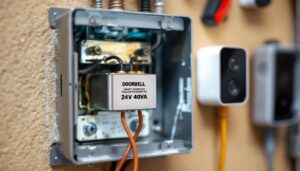
Video doorbells are particularly valuable for DIYers. Most models install in under 30 minutes using existing doorbell wiring (typically 16–24V AC from a transformer). If your home lacks doorbell wiring, battery-powered models like the Ring Video Doorbell (4th Gen) mount with just two screws and a plastic anchor, though they require recharging every 3–6 months depending on motion detection settings.
For outdoor security cameras, prioritize IP65 or higher weatherproofing and a wide field of view (130° minimum). The Arlo Pro 4 and Nest Cam both offer color night vision, which is genuinely useful for identifying package thieves or distinguishing between a raccoon and a person at 2 a.m.
Subscription costs matter here. Ring Protect starts at $4/month per device, while Arlo Secure runs $5/month. During Black Friday, many brands bundle 3–6 months of free service with camera purchases, effectively adding $15–30 in value. Read the fine print, some trials auto-renew unless you cancel.
One safety consideration: if you’re installing outdoor cameras under eaves or soffits, ensure you’re not drilling into load-bearing members or blocking soffit ventilation. Most cameras weigh under 12 ounces and mount securely to vinyl siding, wood trim, or stucco with the included hardware.
Smart Lighting and Thermostats
Smart lighting delivers immediate visual impact and real energy savings. Philips Hue starter kits (4 bulbs + bridge) frequently drop to $60–80 on Black Friday, down from $120–140. For budget-conscious DIYers, TP-Link Kasa and Wyze offer Wi-Fi bulbs that skip the hub requirement entirely, though they lack some advanced features like scene syncing across rooms.
When comparing bulbs, check the lumens (brightness) and color temperature range. Most smart bulbs output 800–1100 lumens (equivalent to a 60–75W incandescent). If you’re replacing recessed lighting in a kitchen or workshop, you may need higher-output models (1500+ lumens) to maintain adequate task lighting.
Installation is straightforward, smart bulbs screw into standard E26 sockets and connect via Wi-Fi or Zigbee. The only wiring consideration: if you’re replacing bulbs on a dimmer switch, you’ll need to either replace the switch with a standard toggle or use smart bulbs explicitly rated for dimmer compatibility (most aren’t).
Smart thermostats like the Nest Learning Thermostat and Ecobee SmartThermostat typically see $50–70 discounts during Black Friday. Both models can reduce heating and cooling costs by 10–23% according to independent studies, paying for themselves within 1–2 years in most climates.
Installation requires basic electrical knowledge. Most homes use a standard 24V HVAC system with 4–5 wires (R, C, W, Y, G). The C-wire (common) provides continuous power: if your old thermostat lacks one, you’ll need to either run a new wire from the furnace or use a C-wire adapter (included with most Ecobee models). Shut off power at the breaker before removing the old thermostat. If you’re unsure about your system’s compatibility or voltage, snap a photo of the existing wiring and check it against the manufacturer’s online compatibility tool before buying.
For homes with complex HVAC setups, multi-stage heat pumps, dual fuel systems, or zoned heating, professional installation is worth the $100–150 cost. Incorrect wiring can damage the thermostat, the furnace control board, or both.
How to Plan Your Smart Home Purchases Before Black Friday
Walking into Black Friday without a plan is how you end up with three smart plugs you don’t need and zero of the security cameras you actually wanted. Start by auditing your home’s current tech and infrastructure.
First, map your Wi-Fi coverage. Most smart devices, especially cameras and outdoor lighting, require solid signal strength. Walk through your home with a Wi-Fi analyzer app (free on iOS and Android) and note dead zones. If your garage, backyard, or basement shows weak signal, factor in a mesh Wi-Fi system or range extender before loading up on devices. Projects involving smart security lighting often fail due to poor connectivity, not faulty hardware.
Second, decide on an ecosystem. Mixing Alexa, Google Assistant, and Apple HomeKit is possible, but it adds complexity. Devices certified for multiple platforms (look for “Works with Alexa, Google, and Apple Home” on the box) cost 10–20% more but offer flexibility. If you’re starting fresh, pick one platform and stick with it for at least the first 5–10 devices.
Third, prioritize by impact. A $30 smart plug that automates a space heater or coffee maker delivers daily convenience. A $200 smart lock provides security and eliminates fumbling for keys with grocery bags in hand. A $15 smart bulb in a guest bedroom you rarely use? Low priority. For beginners exploring home automation, starting with high-traffic areas yields better ROI.
Fourth, check your home’s electrical and mechanical compatibility before sale day. Smart thermostats require compatible HVAC wiring (usually 24V systems with a C-wire). Smart locks need doors with standard backsets (2-3/8″ or 2-3/4″) and deadbolt bores (typically 2-1/8″). Video doorbells work best with existing 16–24V doorbell transformers. Measure, photograph, and verify specs now, not while a limited-time deal ticks down.
Finally, set alerts and price-track. Browser extensions like Honey or CamelCamelCamel track historical pricing on Amazon, revealing whether a “Black Friday deal” is genuinely the lowest price of the year or just typical October pricing with flashier marketing. Major retailers including Digital Trends and CNET maintain curated deal pages throughout November. Bookmark these and check them daily starting the week before Thanksgiving. Deals on high-demand items, especially Ring doorbells and Nest thermostats, often sell out within hours.
One often-overlooked step: check return policies. Smart home gear can be finicky with certain routers, doors, or HVAC systems. Target and Best Buy offer 30–90 day return windows during the holidays, while Amazon extends returns on items purchased in November through late January. That flexibility is critical if a “perfect deal” turns out to be incompatible with your setup. Many of the best opportunities appear on Tom’s Guide, which updates hourly during peak sale days.
Conclusion
Black Friday 2026 offers a rare window to build or expand a smart home ecosystem at prices that won’t repeat until next year. The key is treating it like any other home improvement project: measure twice, research thoroughly, and buy with a clear plan. Focus on devices that solve real daily frustrations, fumbling for light switches, adjusting thermostats, or checking who’s at the door, rather than chasing gadgets just because they’re discounted. With the right preparation, this Black Friday can be the foundation of a smarter, more efficient home.