
Table of Contents
ToggleA weathered deck tells a story, of summer barbecues, morning coffee, and seasons of exposure to rain, UV rays, and pollen. Over time, dirt, algae, mold, and mildew embed themselves into wood grain or composite surfaces, creating slip hazards and accelerating decay. Pressure washing isn’t just about curb appeal: it’s preventive maintenance that extends the life of the deck by removing contaminants before they cause rot or structural damage. Done correctly, it prepares the surface for sealant or stain, which protects the investment for years. This guide walks through the entire process, from equipment selection to post-wash care, so homeowners can tackle the job safely and effectively.
Key Takeaways
- Deck pressure washing removes harmful algae, mold, and mildew that penetrate wood fibers and accelerate decay, extending your deck’s lifespan by years.
- Choose an electric pressure washer in the 1,200–2,000 PSI range with a white 40° nozzle for most residential decking to avoid damaging wood and composite surfaces.
- Always test pressure washing on a hidden area first, maintain consistent distance and direction, and spray parallel to wood grain to prevent splintering and water seepage.
- Allow your deck to dry completely (48–72 hours) and verify moisture is below 15% before applying sealant or stain to ensure proper adhesion and prevent mildew growth.
- Avoid common mistakes like using too much pressure, skipping prep work, washing against the grain, and neglecting to rinse thoroughly, which can compromise deck structure and finish durability.
Why Pressure Washing Your Deck Is Essential for Longevity
Organic growth like algae, mold, and mildew doesn’t just sit on the surface, it penetrates wood fibers, breaking down lignin and cellulose that give lumber its strength. Left unchecked, this biological decay leads to soft spots, splintering, and eventual board failure. Composite decking fares better structurally, but mold still creates discoloration and a slippery film that’s unsafe underfoot.
Dirt and tannin stains also trap moisture against the deck surface, preventing proper drying cycles. This constant dampness accelerates rot in pressure-treated lumber and can void warranties on composite products that specify routine cleaning. Pressure washing removes these contaminants, allowing the material to breathe and dry properly between rain events.
Regular washing, typically once or twice a year depending on climate and tree cover, also reveals hidden issues. Loose fasteners, cracked boards, or flashing gaps become visible once grime is cleared away. Catching these problems early prevents costly repairs down the line. For homeowners planning to restain or reseal, pressure washing is non-negotiable: sealant won’t bond to dirty or mildewed surfaces, leading to premature peeling and failure.
Choosing the Right Pressure Washer for Your Deck
Deck cleaning requires a delicate balance: enough pressure to lift embedded dirt, but not so much that it damages wood fibers or etches composite materials. Gas-powered washers typically deliver 2,500–3,500 PSI and are overkill for most decking. Electric models in the 1,200–2,000 PSI range are safer and more controllable for residential decks.
GPM (gallons per minute) matters as much as PSI. A unit with 1.5–2.0 GPM provides enough water flow to rinse away loosened debris without excessive force. Some homeowners rent commercial units, which can work if the operator has experience dialing down pressure and maintaining consistent distance.
Nozzle selection is critical. Most pressure washers include color-coded tips:
- Red (0°): Pinpoint stream, never use on decking: it gouges wood and composites.
- Yellow (15°): High-impact, suitable for concrete, too harsh for deck surfaces.
- Green (25°): Medium-impact, acceptable for heavily soiled wood with careful technique.
- White (40°): Wide fan, ideal for most deck cleaning, especially softwoods like cedar or pine.
- Black (65° soap nozzle): Low-pressure for applying detergent.
For first-time users, starting with the white 40° nozzle at 1,200–1,500 PSI minimizes risk. If that doesn’t lift stubborn stains, incrementally increase pressure or switch to the green 25° tip, testing on an inconspicuous area first.
Alternatively, a surface cleaner attachment, a rotating bar housed under a plastic shroud, distributes pressure evenly and prevents streaking. These work well on large, flat decks and reduce user fatigue.
Preparing Your Deck for Pressure Washing
Prep work determines the outcome. Start by removing all furniture, planters, and grills. Sweep the deck thoroughly to clear loose leaves, dirt, and debris, pressure washing over heavy buildup just creates a muddy mess.
Inspect the deck for protruding nails or screws. Hammer down or remove any that could catch the pressure washer wand or create trip hazards. Check for loose boards and secure them: high-pressure water can lift poorly fastened decking.
Protect nearby plants and siding. Wet down landscaping with a garden hose before starting, and consider draping plastic sheeting over delicate shrubs. If using a deck cleaner with oxygen bleach or sodium percarbonate, overspray can harm foliage. Similarly, avoid blasting siding, windows, or light fixtures with the pressure washer.
If the deck has old stain or sealant that’s peeling, consider using a deck stripper before pressure washing. Apply the stripper per manufacturer instructions, let it dwell for 10–15 minutes, then pressure wash. This two-step process removes failing coatings more effectively than pressure alone.
Pre-treat heavily soiled areas with a deck-specific cleaner. Products containing oxygen bleach (sodium percarbonate) brighten wood and kill mold without the harsh fumes of chlorine bleach, which can damage wood fibers. Apply cleaner with a pump sprayer, scrub with a stiff brush, and let it sit for 10–15 minutes before rinsing. For composite decks, stick to cleaners approved by the manufacturer to avoid voiding warranties.
Safety gear is non-negotiable: safety goggles or a face shield, hearing protection (gas washers are loud), closed-toe boots with good tread, and gloves. The spray can ricochet debris, and prolonged exposure to engine noise damages hearing.
Step-by-Step Deck Pressure Washing Process
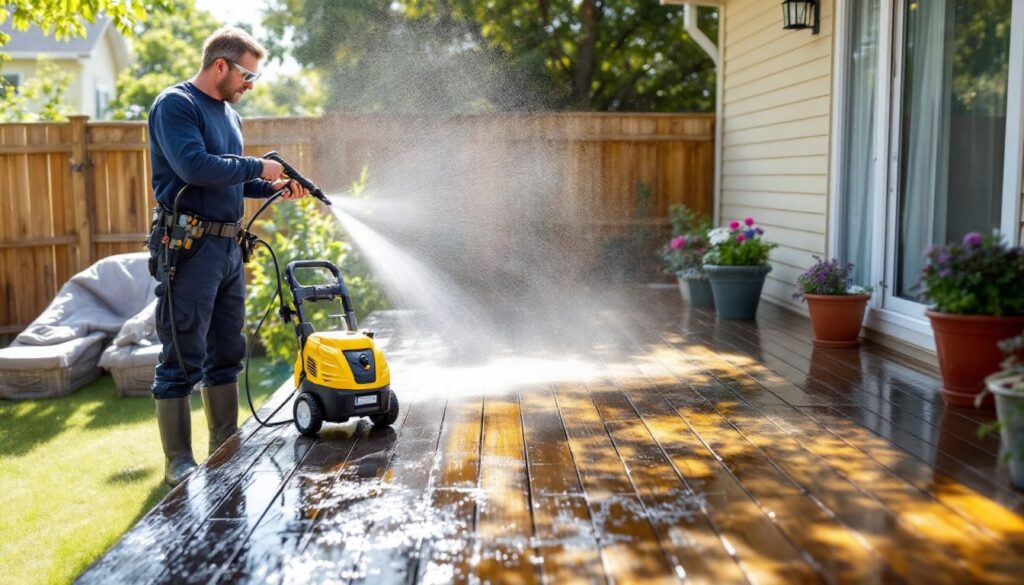
Begin by testing the pressure washer on an inconspicuous section, under a planter or near the house foundation. Hold the wand 12–18 inches from the surface and make a quick pass. If the wood furrows or splinters, reduce pressure or increase distance.
Work in sections, moving systematically from one end of the deck to the other. Always spray parallel to the wood grain or composite grooves, not across them. Crosswise spraying drives water under boards and can cause splintering. Use overlapping strokes to avoid streaking or missed spots.
Maintain a consistent distance and speed. Lingering too long in one spot etches the wood: moving too fast leaves dirt behind. A steady, sweeping motion, similar to mowing a lawn, produces even results.
For railings and balusters, switch to a lower pressure setting or use the 40° nozzle. Vertical surfaces require less force, and it’s easy to accidentally gouge turned spindles or decorative trim.
Rinse thoroughly after washing. Leftover cleaner residue can interfere with stain or sealant adhesion. Work from the house outward, pushing water toward the yard rather than pooling it on the deck.
Allow the deck to dry completely before applying any finish, typically 48–72 hours in warm, dry weather. Check moisture content with an inexpensive moisture meter: wood should be below 15% moisture before staining. Sealing damp wood traps moisture and leads to mildew growth under the finish.
Setting the Correct PSI and Nozzle Type
Softwoods (cedar, pine, fir) and older pressure-treated lumber should be washed at 1,200–1,500 PSI with a 40° white nozzle. These woods are more prone to damage from high pressure.
Hardwoods (ipe, mahogany, cumaru) can handle 1,500–2,000 PSI with a 25° green nozzle if needed, but start lower. Their dense grain resists damage better than softwoods.
Composite decking (Trex, TimberTech, Azek) should stay at 1,200–1,500 PSI maximum. Excessive pressure can scratch the protective cap layer, exposing the core to staining and fading. Always check the manufacturer’s cleaning guidelines: some brands recommend specific PSI limits.
When in doubt, start at 1,200 PSI with the 40° nozzle and test. Incrementally increase pressure only if cleaning is ineffective, and never exceed 2,000 PSI on any residential decking material.
Common Mistakes to Avoid When Pressure Washing Your Deck
Using too much pressure is the most frequent error. Overzealous operators crank gas washers to full throttle and shred wood fibers, creating a fuzzy, raised grain that splinters underfoot. The damage isn’t always visible immediately, boards may look clean but fail prematurely due to compromised structure.
Skipping the test spot leads to costly mistakes. Every deck material and washer combination behaves differently. A two-minute test prevents hours of regret.
Holding the nozzle too close (under 12 inches) concentrates force and gouges the surface. Maintain distance and let water volume do the work, not brute pressure.
Washing against the grain drives water into seams and under boards, increasing warp and rot risk. Always follow the grain direction.
Ignoring weather conditions is another pitfall. Washing in direct sunlight causes cleaners to dry too quickly, leaving residue or streaks. Overcast days or early morning work best. Similarly, avoid washing when rain is forecast within 48 hours, deck needs time to dry before sealing.
Failing to rinse thoroughly leaves chemical residue that interferes with finishes. Many homeowners also rush to restain before the wood is fully dry, trapping moisture and causing peeling or mildew.
Neglecting railings and joists creates an incomplete job. Algae and dirt collect on underside surfaces and horizontal rail caps. These areas need attention, too, or they’ll continue shedding contaminants onto freshly cleaned decking.
Using chlorine bleach on wood decks is a mistake. It lightens wood unnaturally, breaks down lignin, and corrodes fasteners. Oxygen bleach (sodium percarbonate) is safer and just as effective for mold and mildew.
For additional maintenance tips across various outdoor surfaces, resources like The Spruce offer comprehensive cleaning guides.
Post-Washing Care: Sealing and Protecting Your Deck
Pressure washing removes old sealant and opens wood pores, making it vulnerable to moisture, UV damage, and mildew. Applying a protective finish within two weeks of washing is critical, naked wood deteriorates quickly.
Sealers repel water but don’t add color. They’re ideal for homeowners who like the natural wood tone. Look for products with UV inhibitors to slow graying.
Stains penetrate wood fibers and come in three types:
- Transparent: Shows wood grain, minimal UV protection, requires reapplication every 1–2 years.
- Semi-transparent: Adds color while showing grain, moderate UV protection, lasts 2–3 years.
- Solid: Opaque like paint, maximum UV protection, lasts 4–5 years but hides wood grain entirely.
For composite decks, skip stain and sealant, most manufacturers advise against it. Instead, apply a composite deck cleaner and protectant annually to maintain color and resist staining.
Before applying any finish, confirm the wood is dry (below 15% moisture). Use a penetrating oil-based stain for maximum durability on high-traffic decks, or a water-based stain for easier cleanup and faster drying. Always follow the manufacturer’s application instructions about temperature, humidity, and recoat times.
Apply stain with a roller, brush, or pump sprayer, working in small sections and back-brushing to ensure even penetration. Two thin coats perform better than one heavy coat, which can peel.
Regular maintenance extends the time between full washes. Sweep weekly to remove debris, clear leaves from between boards, and spot-clean spills promptly. Trim back vegetation to improve airflow and reduce moisture buildup.
For cost planning and contractor comparisons, platforms like HomeAdvisor provide regional pricing benchmarks if hiring a professional becomes necessary. But, most homeowners with basic tool skills can successfully pressure wash their own decks, saving hundreds of dollars while maintaining control over technique and timing.